
ACCOUNTANTS INVENTED SLOP. NOT AI.
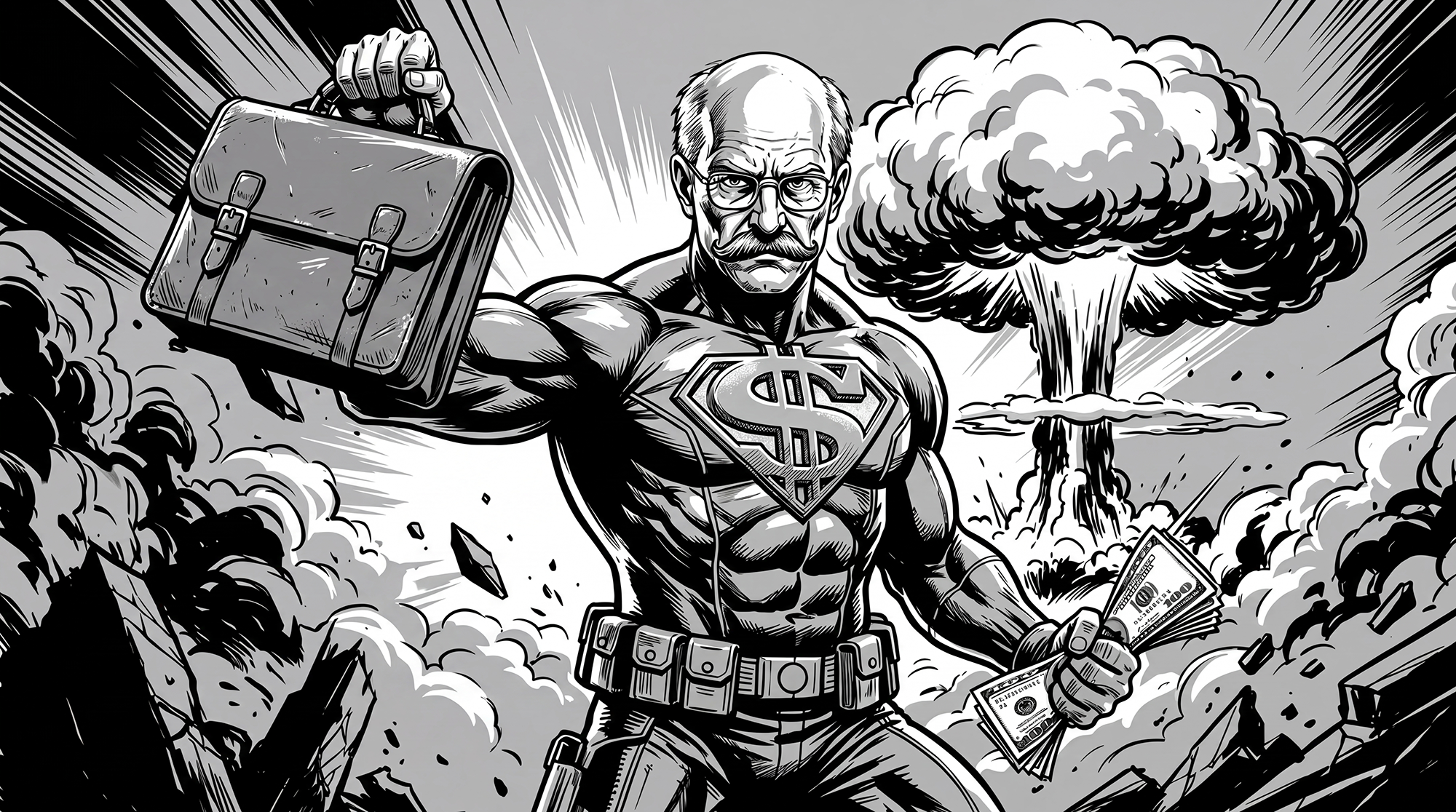
Merriam-Webster named “slop” Word of the Year for 2025. Their definition: “digital content of low quality that is produced usually in quantity by means of artificial intelligence.”
What’s interesting, is once the word took hold, people started applying it everywhere. Architecture slop. Fashion slop. Car slop. The Ringer documented it in December 2025: the AI-specific term got borrowed back to describe non-AI things that just feel, welp, AI-ish. Slop became shorthand for low-effort work, built for max gains.
AI didn’t invent slop. It just gave a name and identity to something that had been quietly spreading for decades.
Because slop is not an aesthetic failure. It’s a business model.
FOLLOW THE MONEY
in 2009 Disney paid $4 billion for Marvel, then $4 billion for Lucasfilm in 2012.
Once you’ve written cheques that size, the math changes everything. Creative adventure becomes something the quarterly numbers just won’t forgive. You need volume. You need predictability. Something that works not just across movies - but also streaming, toys, theme parks, and licensing deals.
Within this context, ‘slop’ isn’t a creative failure at Disney. It’s the only thing that makes financial sense.

THE MARVEL NUMBERS DON’T LIE
In 2023, The Marvels opened to $47 million on opening weekend. The lowest in MCU history, for a sequel to a billion-dollar film. Ant-Man and the Wasp: Quantumania fared better on paper, but still represented a significant collapse versus what the franchise typically pulled. Bob Iger publicly admitted they'd oversaturated the market. Franchise researcher David A. Gross called it "an unprecedented Marvel box office collapse." Disney's own internal reviews flagged "content quality fatigue" and "creative dilution" as named problems.
Disney had pumped out 33 Marvel films in 15 years. Not because audiences were asking for 33 films. Because a $4 billion asset needed to keep printing money.
THE MECHANISM IS THE SAME
Right now, the same process that produced The Marvels is the same template pumping out brand creative elsewhere.
Risk-averse decision makers, chasing proven results. Output gets ‘optimised’ against what worked before, and everything becomes familiar, safe, inoffensive. The result: Work that looks like everything else, because it was built from everything else.
Slop isn’t about the tech. It’s what happens when an incentive structure replaces a creative one.

The infamous Jeanswest ‘slop’ campaign
THE BACKLASH IS REAL
The thing is, audiences have been clocking this in Hollywood for two decades. They spot it in a brand campaign in about three seconds (Hello Jeanswest). The only people who seem genuinely surprised are usually the ones who approved the brief.
Scientific American, reported the cost of producing slop has basically collapsed to zero. Meanwhile the mental cost everyone else pays goes up. AI didn’t create that gap. It supercharged it. And the audiences watching your brand creative are the same ones who eventually stopped showing up for Marvel.
SO WHAT ACTUALLY WORKS
In the same summer Marvel posted its worst numbers in fifteen years, two other films absolutely smashed box office records. Barbie and Oppenheimer. A bright pink comedy and a dark grey epic, so tonally opposed that audiences turned the contrast itself into a cultural moment. “Barbenheimer” became the fourth largest opening weekend in US box office history, driven entirely by word of mouth, memes, and genuine excitement. Nobody in a studio planned it. It just happened, because people were hungry for something new.
So why did they work? They won because the creative direction was genuine, not calculated. No franchise safety net. No accountant in the room, regulating what was safe enough to greenlight. A pure point of view, executed with craft and care.
(Turns out that still works).
Slop exists because for years, it worked - whether companies were pumping out movies or McMansions. But now, audiences are recognising it.
Slop is not an aesthetic. It's a mindset.
Meanwhile, as AI expands, the brands quietly cutting art directors and handing the brief to an AI tool are about to learn the same thing Marvel did… Because audiences can't unsee slop. And once they've clocked it on your feed, they'll stop showing up.
Turns out the most expensive person in the room wasn't the art director. It was the accountant.
Is your company commissioning creative like an accountant? Book a chat.