
THE RACE TO THE MIDDLE
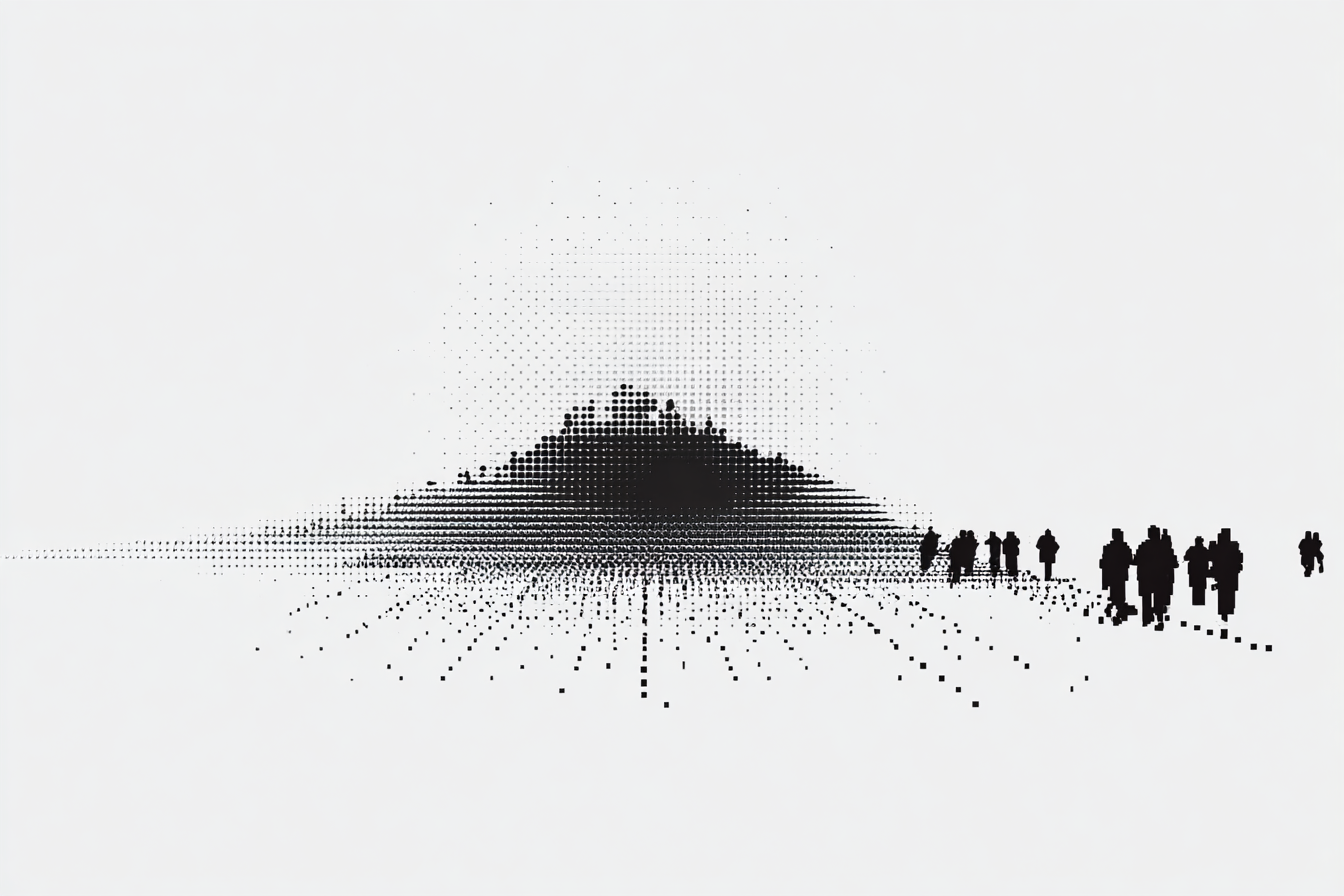
Forbes called it “AI homogenisation.” Carat’s global chief strategy officer described it as “everyone using the same tools and data sources and ending up with similar outputs.” Brands are producing more content than ever. With less creative oversight, they’re starting to look, sound, and feel like each other.
The pattern isn’t just a vibe check. Research has found that AI‑generated content shows linguistic convergence: different brands using similar models drift toward the same language over time. Not a glitch. A direction of travel.
Same colour palettes. Same tone of voice. Same category clichés. Same hooks. Same everything. When that happens, customers can’t remember you. And if they can’t remember you, they can’t choose you.
THE AI HOMOGENISATION TRAP
This is the hidden cost of “efficient content”: AI homogenisation. Everyone feeding similar prompts into similar systems, then wondering why everything feels like the same ad in a different font.
It’s not that the tools are bad. It’s that most brands use them to average out risk instead of amplify difference. Tell a system trained on the whole internet to “sound like a modern brand” and it will. That’s the problem.
The more categories lean on the same defaults, the more your brand drifts toward the middle. Not distinctive. Not hated. Just forgettable.
THE MODEL COLLAPSE PROBLEM
Under the hood, it gets worse. Stanford researchers call it “model collapse”: when AI systems are trained on too much AI‑generated content, their outputs become increasingly uniform. They lose the nuance and diversity that made human training data valuable in the first place.
That creates a feedback loop. Brands use AI to create content faster. AI‑generated content floods the internet. Future models train on that homogenised sludge. The next round of outputs is even more generic. The cycle accelerates.
You end up with models that are great at predicting the most probable next word and terrible at helping you say anything worth remembering.
DISTINCTIVENESS IS NOT A DESIGN PREFERENCE
Kantar’s brand growth work is clear: in the early stages, difference beats everything. Not just awareness. Not just reach. Difference. The thing that makes someone remember you instead of the other fifteen brands in their feed that day.
This isn’t about liking the logo. Companies with distinctive brand personalities see meaningfully better retention than those with generic positioning. Content with a specific voice and point of view pulls more engagement than standardised messaging designed to offend no one.
If your brand can’t be distinguished, it can’t be remembered. If it can’t be remembered, it can’t be chosen. And brands that can’t be chosen don’t fall off a cliff. They bleed market share quietly, gradually, until one day it looks like “sudden” decline.
THE 83% PROBLEM
Then there’s the detection problem. In some consumer studies, more than 80% of people say they can spot AI‑generated content. Even when the text is edited, accuracy stays high. The audience is moving faster than most marketing teams.
When people think something was generated and quietly posted as if it wasn’t, they don’t shrug. A big chunk report feeling deceived. Not because AI is evil, but because they can feel the brand reaching for a shortcut and hoping they won’t notice.
They’re not running forensic analysis. They’re picking up on what’s missing: lived experience, specific opinion, a bit of mess. The human weirdness that makes content feel like it belongs in the real world instead of a template pack.
WHAT ACTUALLY DIFFERENTIATES
The tool isn’t the advantage. Everyone has the tool. The advantage is what you bring to it that nobody else can: the specific visual language of your brand, the stories only you can tell, the calls you make that a probability model never would.
Carat predicted that 2026 would be the year of differentiation. That brands would need the right blend of AI and “PI” – personal intelligence. The companies that win are the ones reading culture, feeling the moment, and then using AI to execute once someone who understands the brand has decided what it should say.
The brands producing the most content are not the ones producing the best content. The brands investing in creative direction, then using AI to extend that direction into more formats and contexts, are the ones building something the algorithm and the audience actually respond to.
AI can help you make more content.
Only distinct creative direction keeps you out of the middle.